Abstract
Title: “Implementation gap in global power capacity expansion”
Abstract:
Meeting the Paris Agreement’s climate targets demands an unprecedented expansion of renewable energy. Despite global commitments, significant implementation gaps persist due to economic, policy, and technical uncertainties.
Here, we develop a Global Power Capacity Dynamics Framework, integrating facility-level data, machine learning and transition modelling to assess the feasibility of global power expansion. Analyzing 215,849 power plant units across status modes, the framework explicitly incorporates the likelihood of planned capacity realization and the conversion of existing fossil assets.
We find that by 2030, only 51% [40–61%] of announced planned capacity is expected to become operational, while 26% [19–36%] is likely to be cancelled, with fossil fuel projects, especially coal, facing a cancellation rate of about 35%. Global operational capacity is projected to reach 9,727 GW [9,626–9,848], including 178 GW [159–198] of existing fossil units requiring conversion or replacement (e.g., coal-to-gas, fossil-to-biomass).
Although renewables dominate the planned pipeline, they are projected to constitute only 52% of the global energy mix by 2030, well below levels needed to meet climate goals.
Time
24 July 2026
10:00–11:00 AM
Zoom Meeting
Online via Zoom
Meeting ID: 214 315 9246
Passcode: 912321
Speaker

Peipei Chen
City University of Hong Kong
Peipei Chen is an Assistant Professor at School of Energy and Environment, City University of Hong Kong.
She received her PhD from the Bartlett School of Sustainable Construction at University College London in 2024 and subsequently worked as a Research Associate in the Energy Policy Research Group at the University of Cambridge.
Her research interests include energy economics, energy transitions analysis and data analysis.
She has authored around 20 peer-reviewed publications in high-impact journals such as Nature Energy, Nature Climate Change, Nature Chemical Engineering and Nature Communications, with several of her findings cited in United Nations reports.
She also serves as an Associate Editor for the Journal of Cleaner Production and is a regular peer reviewer for leading academic journals.
Discussant
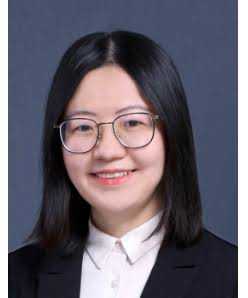
Dan Tong
Tsinghua University
Dan Tong is an Associate Professor and Doctoral Supervisor at the Department of Earth System Science, Tsinghua University. She was selected for the Overseas High-Level Young Talents Introduction Program.
Her research focuses on policy analysis for synergistic climate and environmental responses, as well as impact mechanisms and strategic studies of renewable energy under climate change.
She has published over 80 SCI-indexed papers, including 3 in Nature and more than 10 in Nature sub-journals and PNAS as first or corresponding author. Her SCI publications have received over 21,000 total citations, with an h-index of 52. One of her study was ranked 16th in the global list of the top 100 most publicly discussed research works.
She has been consecutively named a Clarivate Highly Cited Researcher from 2021 to 2025, was selected for the MIT Technology Review Innovators Under 35 China list in 2019, and received the DAMO Academy Qingcheng Award in 2022. She has been awarded the First Prize of the Environmental Protection Science and Technology Award.
Why Join?
- Gain insights into cutting-edge research on the implementation gap in global power capacity expansion and its implications for achieving the Paris Agreement's climate targets.
- Learn about an innovative analytical framework that combines facility-level data, machine learning, and transition modelling to assess the feasibility of the global energy transition.
- Understand the challenges and opportunities facing renewable energy deployment, fossil fuel phase-out, and power system transformation worldwide.
- Hear from leading researchers in energy transitions and climate policy from City University of Hong Kong and Tsinghua University.
- Engage in academic discussion on the latest evidence, policy implications, and future research directions in energy and climate studies.